
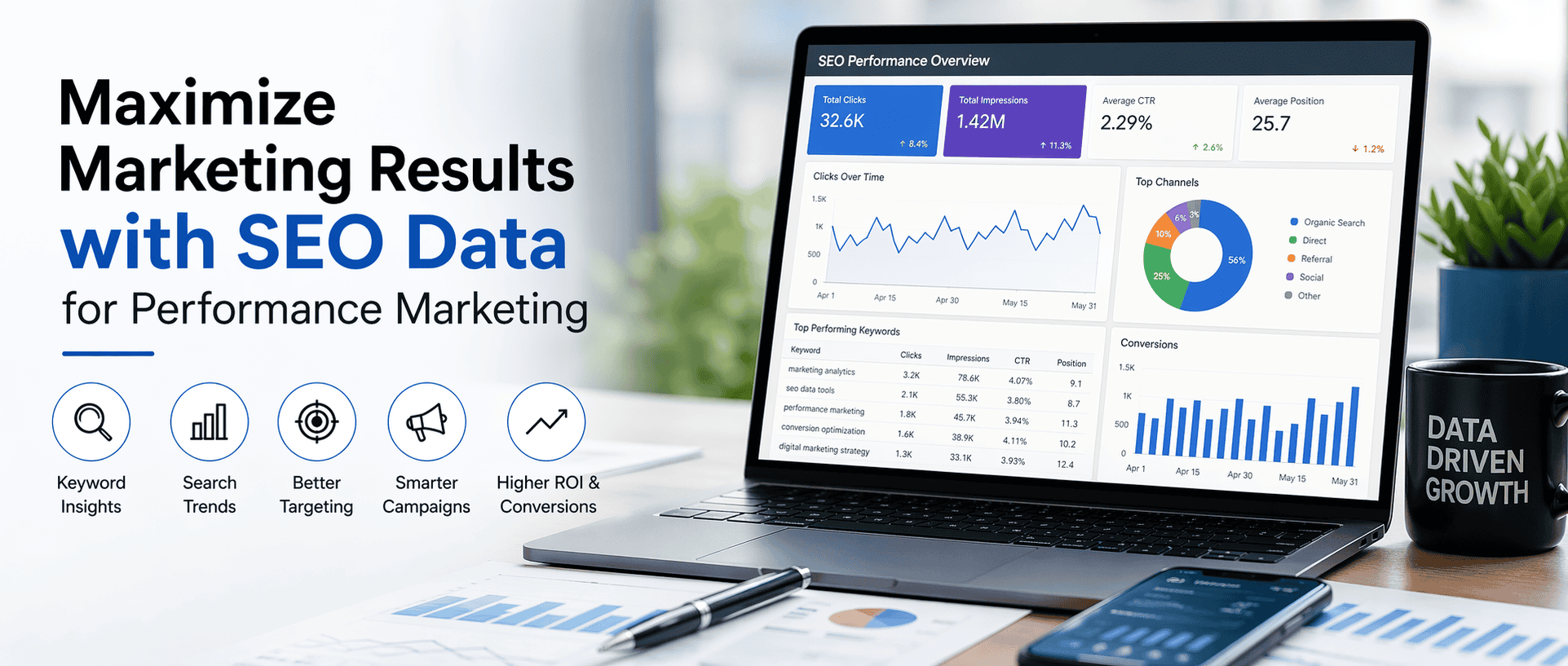
Maximize Marketing Results with SEO Data
Maximize Marketing Results with SEO Data for Performance Marketing
SEO Data for Performance Marketing is one of the most underused advantages in modern digital strategy. While many marketers rely heavily on paid traffic dashboards alone, combining SEO intelligence with performance campaigns unlocks deeper targeting, smarter messaging, and significantly stronger ROI.
Today’s highest-performing teams don’t treat SEO and paid campaigns separately. They integrate both into a unified decision engine powered by search behavior insights.
If you’re aiming to scale conversions without scaling costs at the same rate, learning how to use SEO data strategically can transform your results.
How SEO Data Strengthens Performance Marketing Strategy
Performance marketing thrives on measurable outcomes. SEO data delivers exactly that—real user intent signals collected at scale.
Unlike assumptions or guesswork, search data reflects what people actually want right now.
When applied correctly, SEO data helps marketers:
- Identify high-intent audiences
- Improve ad relevance
- Reduce acquisition costs
- Increase conversion rates
- Strengthen landing page performance
This turns SEO from a visibility tool into a revenue accelerator.
1. Identify High-Intent Keywords That Convert Better
Not all keywords are equal.
SEO research reveals which search queries signal:
- purchase readiness
- solution awareness
- comparison behavior
- urgency
These insights allow marketers to prioritize terms already aligned with conversion intent instead of broad awareness traffic.
For example, a keyword like:
“best CRM for small business pricing”
typically converts better than:
“what is CRM software”
because it reflects decision-stage behavior.
This intelligence improves campaign targeting immediately.
2. Build Smarter Audience Segments Using Search Behavior
Search queries act like a window into customer psychology.
Instead of guessing audience interests, SEO data reveals:
- questions users ask
- problems they want solved
- alternatives they compare
- features they value most
This allows marketers to create audience segments based on real intent rather than assumptions.
Campaign messaging becomes sharper, and results follow.
3. Improve Ad Copy Using Real Search Language
One of the fastest wins from SEO data comes from rewriting ad copy using actual search terms.
When ad headlines reflect how users naturally describe their needs:
- click-through rates increase
- relevance scores improve
- CPC often drops
- conversions rise
Search language equals customer language.
And customer language drives performance.
4. Optimize Landing Pages with Organic Search Insights
Landing page optimization often depends on testing variations blindly.
SEO data removes that guesswork.
Instead, marketers can align landing pages with:
- frequently searched questions
- feature comparisons
- pricing expectations
- trust signals users seek before converting
When landing pages mirror organic search expectations, they feel familiar and trustworthy, leading to stronger engagement.
This is exactly where performance marketing insights become especially valuable for bridging organic strategy and paid acquisition efficiency.
5. Reduce Paid Media Waste Through Keyword Filtering
Many campaigns waste budget targeting keywords that never convert.
SEO analytics reveals which terms:
- attract informational traffic only
- create bounce behavior
- generate low engagement sessions
These keywords can then be removed from performance campaigns.
The result?
Cleaner traffic. Lower costs. Higher ROI.
6. Discover New Campaign Opportunities Earlier Than Competitors
Search trends shift before most marketers notice.
SEO data highlights:
- rising queries
- seasonal demand changes
- emerging product needs
- new comparison behavior
This early visibility helps performance teams launch campaigns ahead of competitors instead of reacting later.
Timing alone can dramatically increase campaign profitability.
7. Align Content Strategy with Conversion Funnels
Performance marketing works best when supported by strong content.
SEO data identifies exactly what content users need at each stage:
Awareness Stage
Users search for:
- definitions
- guides
- educational resources
Consideration Stage
Users search for:
- comparisons
- alternatives
- reviews
- feature breakdowns
Decision Stage
Users search for:
- pricing
- implementation
- ROI expectations
- best provider options
Matching campaign content to funnel stage dramatically improves conversion flow.
Combining SEO Data with Paid Analytics Creates a Growth Engine
Many marketers treat SEO and performance campaigns as separate departments.
That approach limits growth.
Instead, when both datasets work together, marketers gain:
- clearer attribution insight
- better messaging consistency
- stronger keyword prioritization
- smarter landing page alignment
- faster campaign optimization cycles
This integration turns marketing from reactive experimentation into predictive strategy.
Professionals exploring deeper performance marketing insights often discover that SEO intelligence becomes the backbone of scalable campaign success.
Practical Steps to Start Using SEO Data for Performance Marketing Today
You don’t need a large analytics team to apply this strategy.
Start with these simple actions:
Step 1: Export Top Organic Keywords
Identify:
- highest traffic terms
- highest engagement terms
- highest conversion-assisting terms
These should influence paid targeting immediately.
Step 2: Review Search Console Queries Weekly
Look for:
- rising impressions
- new keyword clusters
- unexpected audience interests
These reveal new campaign opportunities early.
Step 3: Compare Organic and Paid Conversion Behavior
Check which keywords:
- convert organically
- underperform in ads
- outperform expectations
Then adjust targeting strategy accordingly.
Step 4: Align Landing Pages with Search Intent
Ensure your landing pages match:
- keyword expectations
- visitor awareness level
- solution urgency signals
Intent alignment improves both SEO and paid performance simultaneously.
Common Mistakes Marketers Make with SEO Data
Even experienced teams sometimes misuse search insights.
Here are the most common pitfalls:
Treating SEO as Traffic-Only Strategy
SEO is not just about rankings.
It is a behavioral intelligence system.
Ignoring Mid-Funnel Search Queries
Comparison searches often signal the strongest purchase intent.
Skipping them reduces conversions.
Separating Organic and Paid Teams
Shared data multiplies impact.
Siloed data limits performance.
Avoiding these mistakes helps unlock the full value of SEO Data for Performance Marketing.
Final Thoughts: Data-Driven Marketing Wins More Often
Modern marketing success depends less on budget size and more on insight quality.
SEO data provides one of the clearest signals available about:
- customer intent
- timing
- expectations
- decision behavior
When performance teams integrate search intelligence into campaign planning, results become more predictable, scalable, and efficient.
If your goal is stronger ROI without increasing acquisition costs dramatically, SEO Data for Performance Marketing is one of the smartest strategies you can implement today.
